What Is an MVP? (And Why Most Founders Build It Wrong)

TL;DR / Summary
Not sure what an MVP is? Learn what a minimum viable product means, why startups use it, common mistakes founders make, and real-world examples.
Table of Contents
- So What Actually Is an MVP?
- Building for everyone at once
- Why Do Founders Even Build MVPs?
- When Most Founders Build the MVP Wrong
- 1. Building features, not answers
- 2. Confusing 'minimum' with 'bad'
- 3. Launch and disappear
- 4. Never actually moving past the MVP
- When Should You Start Building an MVP?
- Real Examples of MVPs Done Right
- Dropbox: Testing Demand with a Video
- Facebook: Basic Profiles Spark Spread
- Amazon: Books Prove Online Buying
- How To Actually Build an MVP
- Step 1: One Problem, One Person
- Step 2: Write Your Core Assumption
- Step 3: Build Only to Test It
- Step 4: Test with Real Users Fast
- Step 5: Making a decision: Pivot, Persevere, Decide, or Stop
- Difference between MVP, MLP, and MMP
- MVP (Minimum Viable Product)
- MMP (Minimum Marketable Product)
- MLP (Minimum Lovable Product)
- FAQs
- 1. What does MVP stand for in startups?
- 2. How long does it take to create an MVP?
- 3. What’s the difference between an MVP and a prototype?
- 4. What should I do after launching an MVP?
- 5. Do you handle both design and development?
- It's Not About Building Less. It's About Learning More.
Someone tells you to 'just build an MVP', and you nod along like you totally get it. But deep down, you're thinking, “Am I supposed to code the entire thing, or just a specific piece?” Because, seriously, that part never gets explained.
That feeling? It’s way more common than you think. Most founders hear ‘MVP’ all the time.
But honestly, most people don't fully get what that means in practice. You start building something. It takes months. And then you realise you built the wrong thing entirely.
By the end of this post, you'll know exactly what an MVP is, what it isn't, and, most importantly, why so many smart people still get it completely wrong before they even write a single line of code.
So What Actually Is an MVP?
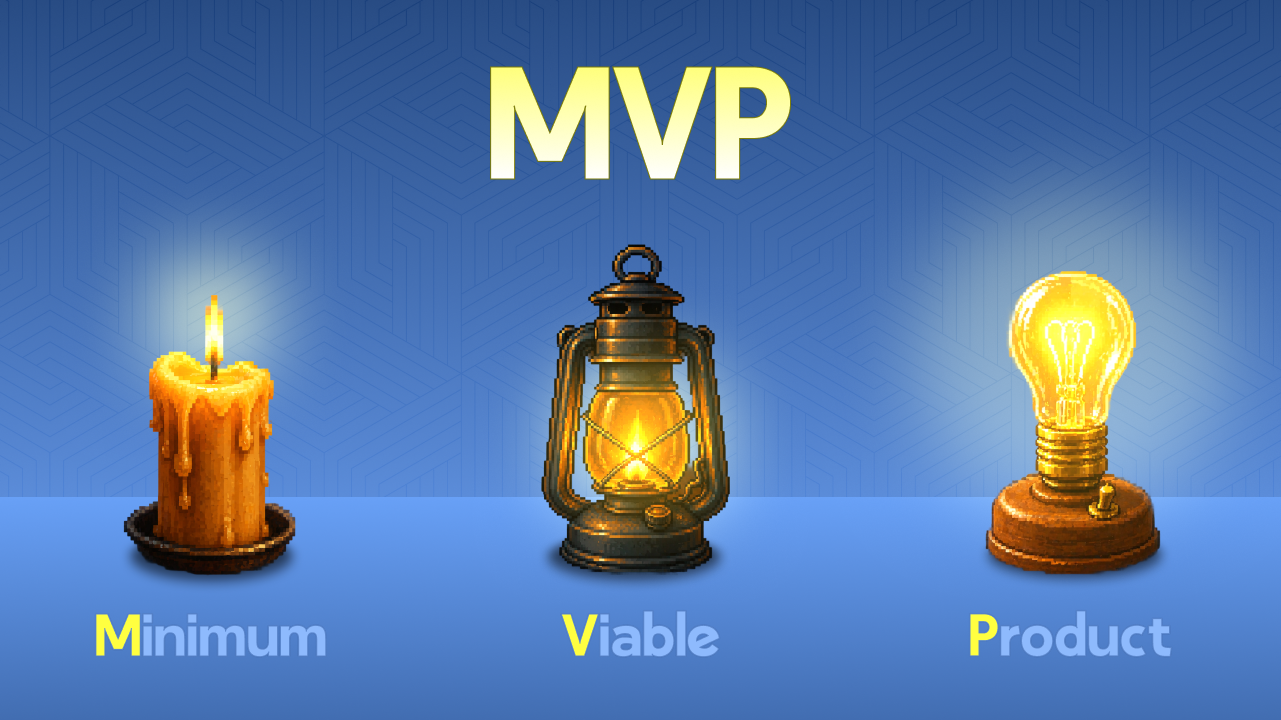
An MVP (Minimum Viable Product) is the simplest version of a product that solves one real problem and helps you test if people actually want it.
It’s not about building everything. It’s about learning what works, fast.
Think you want to open a lemonade stand? You could spend three months designing a beautiful stand, ordering, creating a logo, and hiring people to help, only to find out on the first day that nobody in your neighbourhood actually wants lemonade. That's the nightmare. That's what building without an MVP looks like.
Now imagine instead you just grab a table, a pitcher, and a handwritten sign, and you set up for one afternoon. You find out real fast whether people will buy lemonade. That second version? That's closer to what an MVP actually is.
MVP stands for Minimum Viable Product.
Most people misunderstand the word “minimum” and assume it means cheap, rough, or incomplete; that’s the first mistake.
In an MVP, both words matter equally:
'Minimum' implies that you are only creating what is necessary. 'Viable' also implies that it should be efficient enough to serve as an actual product that is usable by real people. A lot of entrepreneurs get the wrong idea about MVPs. They either think it means shipping something half-baked and ugly or feel embarrassed by it. Or they keep polishing it until it's basically a full product.
Building for everyone at once
An MVP is not for every type of user. It's for one specific group of people with one specific problem when founders try to make the MVP work.
The real purpose of an MVP is not to deliver a product. A product so stripped down that it can't teach you anything isn't an MVP. It's just an unfinished product. The goal is simple: learn what your customer actually cares about, fast. That one shift in thinking changes everything.
"An MVP isn't a cheap version of your product. It's the cheapest way to find out if your product is actually solving a problem.”
Why Do Founders Even Build MVPs?
Founders don’t build MVPs to launch fast. They build them to avoid building the wrong thing.
At the early stage, everything is an assumption. You think users have a problem. You think your solution works. But until real people actually use it, it’s all guesswork.
An MVP exists to remove that guesswork.
It helps you answer one simple question:
“Does this idea provide real value?”
Instead of spending months building a full product, you test the core idea in the simplest way possible. If it works, you move forward with confidence. If it doesn’t, you change direction early, before wasting time and money.
There are a few real reasons founders rely on MVPs:
To reduce risk - You don’t commit fully until you see real demand
To learn faster - You get feedback from actual users, not opinions
To save time and money - You only build what’s necessary at first
To gain clarity - You understand what matters and what doesn’t
Most founders who skip this step don’t fail because they can’t build.
They fail because they built something nobody needed.
An MVP is not a shortcut.
It’s a way to make better decisions early.
When Most Founders Build the MVP Wrong
You can read ten articles about MVP and still walk away building the wrong thing, because most of those articles tell you what an MVP is, but not what goes wrong when real people try to build one.
Here are the five most common mistakes; at least one of these will probably feel a little too familiar.
1. Building features, not answers
Most founders start building before they've clearly figured out the question they're trying to answer. They treat the MVP like a product delivery project, with more features, better design, and more polish.
But an MVP is about testing an assumption. If you don't know what belief you're trying to prove or disprove going in, you'll never know whether your MVP worked.
2. Confusing 'minimum' with 'bad'
For too many different people, they water it down so much that it doesn't clearly solve anything for anyone. You end up with something that sort of works for lots of people, but doesn't really work great for any of them.
3. Launch and disappear
Many teams build the MVP, release it, gather some unclear feedback, and end up either scrapping the product or continuing its development without any kind of data informing their decisions.
Without a proper feedback loop, an MVP isn’t a learning tool but merely another release. A release without learning is just a pointless exercise.
4. Never actually moving past the MVP
For some startups, the MVP is an easy way out of the situation, and they never really get past the MVP stage. They continue polishing and perfecting the basic prototype without fully committing to the next build. It’s comforting. But it’s also a dead-end road – even more destructive than developing too quickly.
When Should You Start Building an MVP?
Building your MVP should happen once you’ve found the problem to solve with it, not once you’re confident about your solution.
That’s where many entrepreneurs stall:
The idea feels perfect
The feature list is complete
The design looks polished
That’s too late.
The right time is much earlier.
You’re ready to build an MVP when:
You can clearly describe the problem
You have a basic idea of how to solve it
You’re unsure if users actually want it
That last point matters the most.
If you’re still unsure, that’s exactly when you should test.
Waiting doesn’t reduce risk; it increases it.
Because every extra week of planning is still based on assumptions.
Start small. Start early. Test quickly.
A simple version in the hands of real users will teach you more in a few days than months of thinking ever will.
And that’s the whole point.
Real Examples of MVPs Done Right
It's one thing to explain what an MVP is. It's another thing to see what it actually looks like in the real world. Here are three of the most well-known examples, but more importantly, here's what each one actually teaches you about how this whole thing works.
It's one thing to explain what an MVP is. It's another to see real-world examples, and what they teach about making it work.
Dropbox: Testing Demand with a Video
Dropbox didn't build the product first. Before writing a single line of code for the full thing, the founder made a simple three-minute demo video showing how Dropbox would work. That's it. Just a video. And people absolutely flooded in to sign up for the beta. The reaction alone told them the demand was real, before they'd built anything at all. The question they were testing was simple: Will people actually want this? The video was the MVP.
Lesson: A video proved demand before a single line of code.
Question tested: Will people want this?
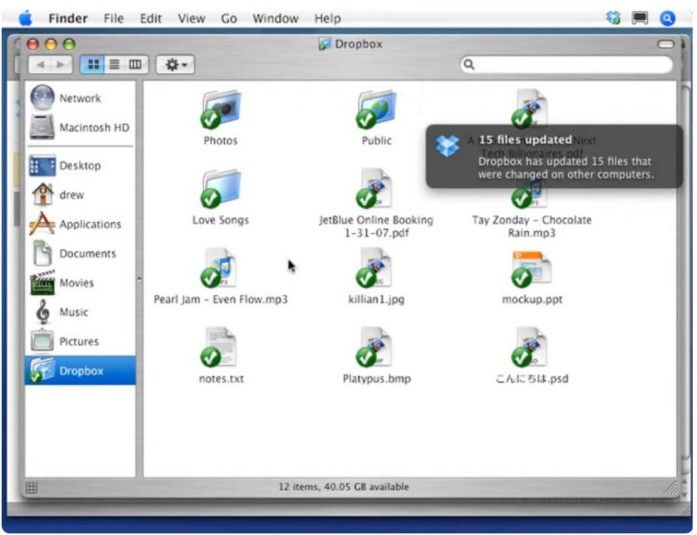
(watch the Dropbox demo here)
Facebook: Basic Profiles Spark Spread
Zuckerberg's original "Thefacebook" had no news feed, no ads, no groups, and no mobile app. It was a single-campus directory where students could list themselves and look up classmates. No algorithmic timeline. No photos. Just profiles and a connection graph. It spread to 1,200 Harvard students in 24 hours, not because it was polished, but because it answered a real social need. The roadmap was written by watching what users did next.
Lesson: The roadmap emerged from user behaviour.
Question tested: Will students connect like this?
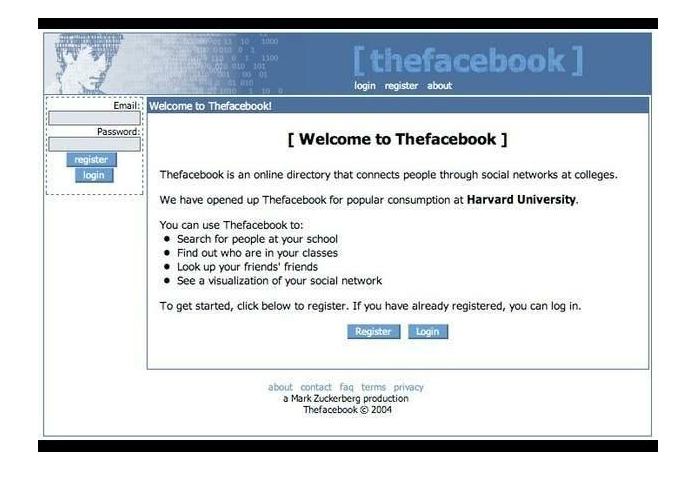
Source: Reddit
Amazon: Books Prove Online Buying
Amazon didn't try to sell everything from day one. Jeff Bezos picked books. Books were easy to ship, had millions of options, and, this is the key part, didn't need to be touched before buying. The question he was testing was whether people would buy something online without seeing or touching it first. That one insight, proven through that one simple starting point, is what eventually unlocked everything else the company became.
Lesson: This narrow focus validated online purchases without physical inspection, unlocking everything else.
Question tested: Will people buy online sight unseen?
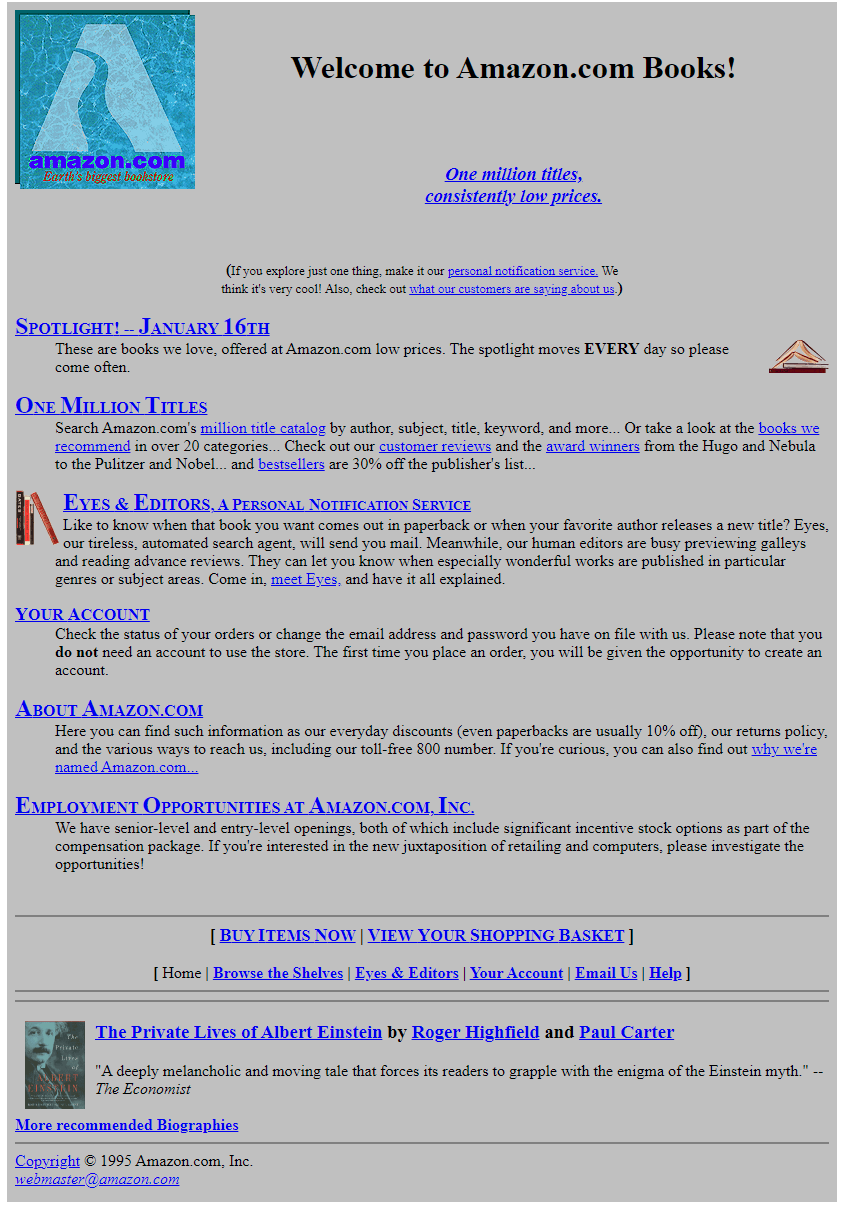
Source: Web Design Museum
See the pattern? No full products launched. Each tested one specific question with a minimal MVP. The honest answer came first; the product followed.
How To Actually Build an MVP
Okay, so now you know what an MVP is and what not to do. Let's talk about how to actually build one in the simplest, most straightforward way possible.
Step 1: One Problem, One Person
Not a broad target market. Not a general type of user. One real, specific kind of person with one real, specific frustration. What does their day look like right now, before your product exists? What's annoying them? What are they doing manually that they wish they didn't have to “do”? The more specific you get here, the easier everything else becomes.
Step 2: Write Your Core Assumption
Every product idea is built on at least one belief about your customer. Write it down like a hypothesis. Something like: 'I believe that freelance designers waste two-plus hours every week managing client invoices manually, and would happily pay for a simpler tool.'
That one sentence is your compass. Your MVP only needs to test that assumption. Everything else is just noise.
Step 3: Build Only to Test It
Not what looks impressive. Not what covers every possible use case. Just the thing that answers your hypothesis. If a simple landing page can do it, use a landing page.
If you need a working prototype, build the simplest one that actually functions. Cut anything and everything that doesn't directly test what you wrote down in step two.
Step 4: Test with Real Users Fast
Not your friends. Not your team. Real potential users who actually have the problem you're trying to solve. Watch them use it. Why versus What. In all honesty, you will gain more from observing how people interact with your product than from listening to their explanations of how they do things. Pay special attention when users start clicking places they should not have clicked on or when users leave the process halfway through.
Step 5: Making a decision: Pivot, Persevere, Decide, or Stop
At this point, you need more than emotions and beliefs to decide on your product. You have several options, such as continuing down your current path, pivoting based on feedback, or stopping altogether because your initial assumptions were wrong.
Either way, all three choices would be the right ones here. In any case, the one decision you must never make is a confused one.
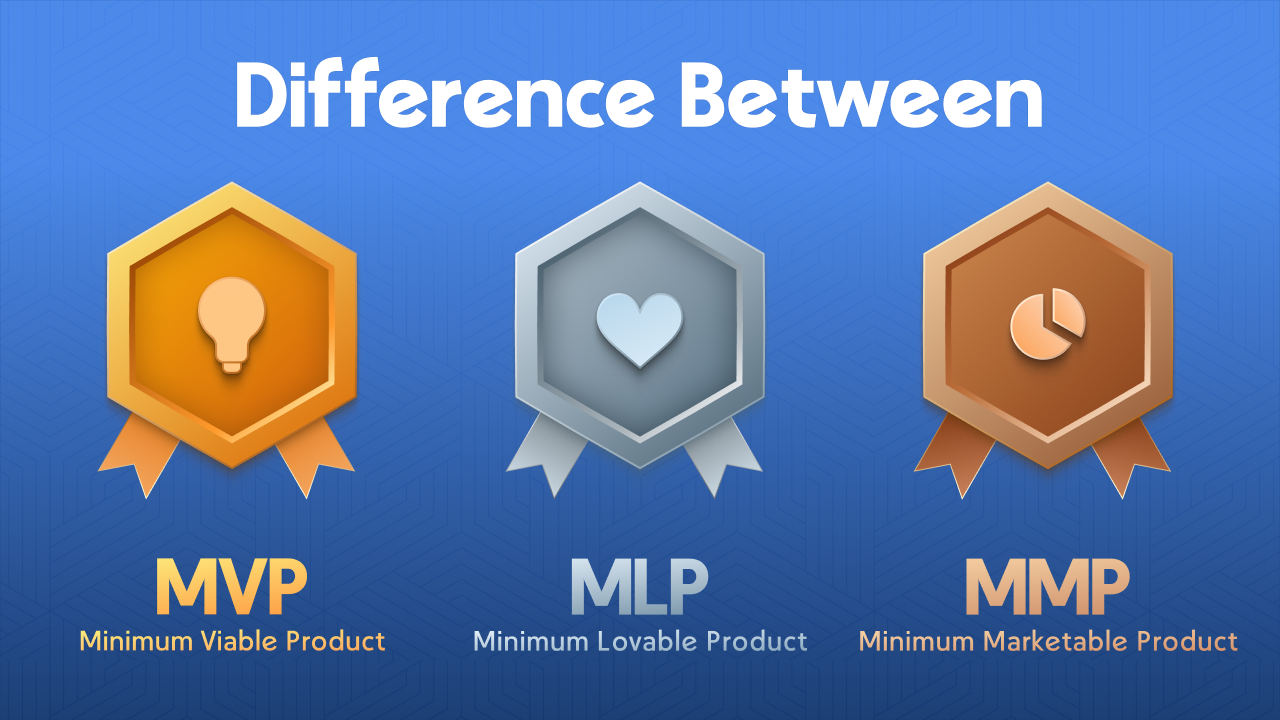
Difference between MVP, MLP, and MMP
Most people think that once the MVP works, you just build the full product and ship it. And that assumption is where a lot of good ideas quietly die. There are actually three stages here, and skipping the middle one is one of the most common reasons products with great early signals still fail in the market.
The MVP, which you now understand, is the learning tool. It's built to test one assumption with minimum effort. The goal is to get an honest answer fast, not to impress anyone.
MVP (Minimum Viable Product)
Think of this as your honest question dressed up as a product. You're not trying to impress anyone; you're trying to get a real answer, fast.
Strip everything down to the one core assumption that matters most, build just enough to test it, and find out if the idea actually holds up before you invest any further.
MMP (Minimum Marketable Product)
Is the first version you're genuinely ready to sell at scale? You build this after you've validated both the idea and the experience.
Most founders think this is what they're building from day one. It's not. It's the third stage, not the first.
MLP (Minimum Lovable Product)
This is the missing step that most founders skip entirely. They go straight from 'okay, the MVP worked' to 'let's launch everything.' And then people try the full product, and it just doesn't feel good yet. The idea was right. The experience wasn't ready.
That's how a lot of good ideas quietly die, not because they were wrong, but because they skipped the step that makes people actually love the thing.
FAQs
1. What does MVP stand for in startups?
MVP stands for Minimum Viable Product.
It’s the most basic version of your product that actually works. Not perfect, not complete, just enough to solve one real problem.
The goal isn’t to impress people. It’s to figure out if anyone actually cares.
Because honestly, there’s no point building the full thing if users don’t even want the core idea.
2. How long does it take to create an MVP?
If the scope is tight and focused, most MVPs take between 6 and 10 weeks. If you're still building four months later, that's usually a sign the project has expanded well beyond ‘minimum.’ At that point, it’s worth reassessing and narrowing the scope. Our MVP development services help founders stay focused, launch faster, and prioritise building what truly matters first.
3. What’s the difference between an MVP and a prototype?
A prototype is more like a preview. It shows how the product might look or flow, but it’s not fully functional. An MVP, on the other hand, is real. People can actually use it.
That’s the key difference.
With a prototype, you’re testing ideas.
With an MVP, you’re testing real behaviour- what users actually do, not just what they say.
4. What should I do after launching an MVP?
After launch, we don't disappear. We keep building the next set of features, make sure performance stays solid, double down on what's working, and grow the team with you as the roadmap evolves.
5. Do you handle both design and development?
That includes UX/UI design, frontend, backend, and deployment. Everything from shaping the idea to getting it live. But more importantly, we help you figure out what actually needs to be built first.
It's Not About Building Less. It's About Learning More.
The majority of founders create a Minimum Viable Product for the simple reason that someone told them to do so. However, the true founders, who know what they are doing, do it out of pure curiosity and wish to have the quickest, cheapest, and truest answer possible before committing themselves.
A minimum viable product is not a method; it is an attitude. It's the belief that the most valuable thing you can do early on isn't to build; it's to learn. And once you learn, you build with confidence instead of guesswork.
If you're ready to go from idea to MVP the smart way, the team at Netizens Technologies has helped founders do exactly that, faster, with less waste, and with a clear plan for what comes next. Get in touch with the Netizens team, and let's figure out what your MVP really needs to be.
Your Product Could Be the
Next Case Study
Explore what we’ve built — and let’s collaborate to create something impactful for your business.
We reply within 24 business hours.