Outsourced Product Support for Founders: How It Works and When to Consider It

TL;DR / Summary
Learn how outsourced product support for founders works, when to outsource, key benefits, costs, and how to choose the right support partner for your startup.
Table of Contents
- When Customer Support Starts Competing With Product Growth
- How Outsourced Product Support Fits Into a Growing Startup
- How the Outsourcing Process Works
- Product Learning
- Process Setup
- Daily Customer Support
- Issue Escalation
- Performance Reporting
- Signs It's Time to Outsource Product Support
- You spend several hours each day answering customer questions.
- Customer response times are becoming slower.
- Product launches create large support backlogs.
- Hiring a full in-house support team isn't practical yet.
- Customer satisfaction scores are declining.
- Your product team is frequently interrupted by support requests.
- Benefits of Outsourced Product Support for Founders
- More Time for Product Development
- Better Customer Experience
- Flexible Scaling
- Lower Operating Costs
- What Should Stay In-House?
- Internal Support vs Outsourced Product Support
- How to Choose the Right Outsourced Product Support Partner
- Experience Supporting Software Products
- Strong Communication Practices
- Transparent Performance Reporting
- Secure Data Handling
- Flexible Scaling Options
- Proven Client References
- Key Metrics to Measure Success
- First Response Time
- Average Resolution Time
- Customer Satisfaction (CSAT)
- Support Ticket Volume
- Repeat Support Requests
- Customer Retention Rate
- FAQs
- 1. Is outsourced product support suitable for startups?
- 2. Can outsourced teams answer technical product questions?
- 3. Will customers know support is outsourced?
- 4. When should founders outsource product support?
- Conclusion
Launching a product is exciting, but supporting customers after launch can quickly become one of the biggest challenges for founders. As your startup grows, customer questions, onboarding requests, bug reports, and technical issues can consume valuable time that should be spent improving your product and growing the business.
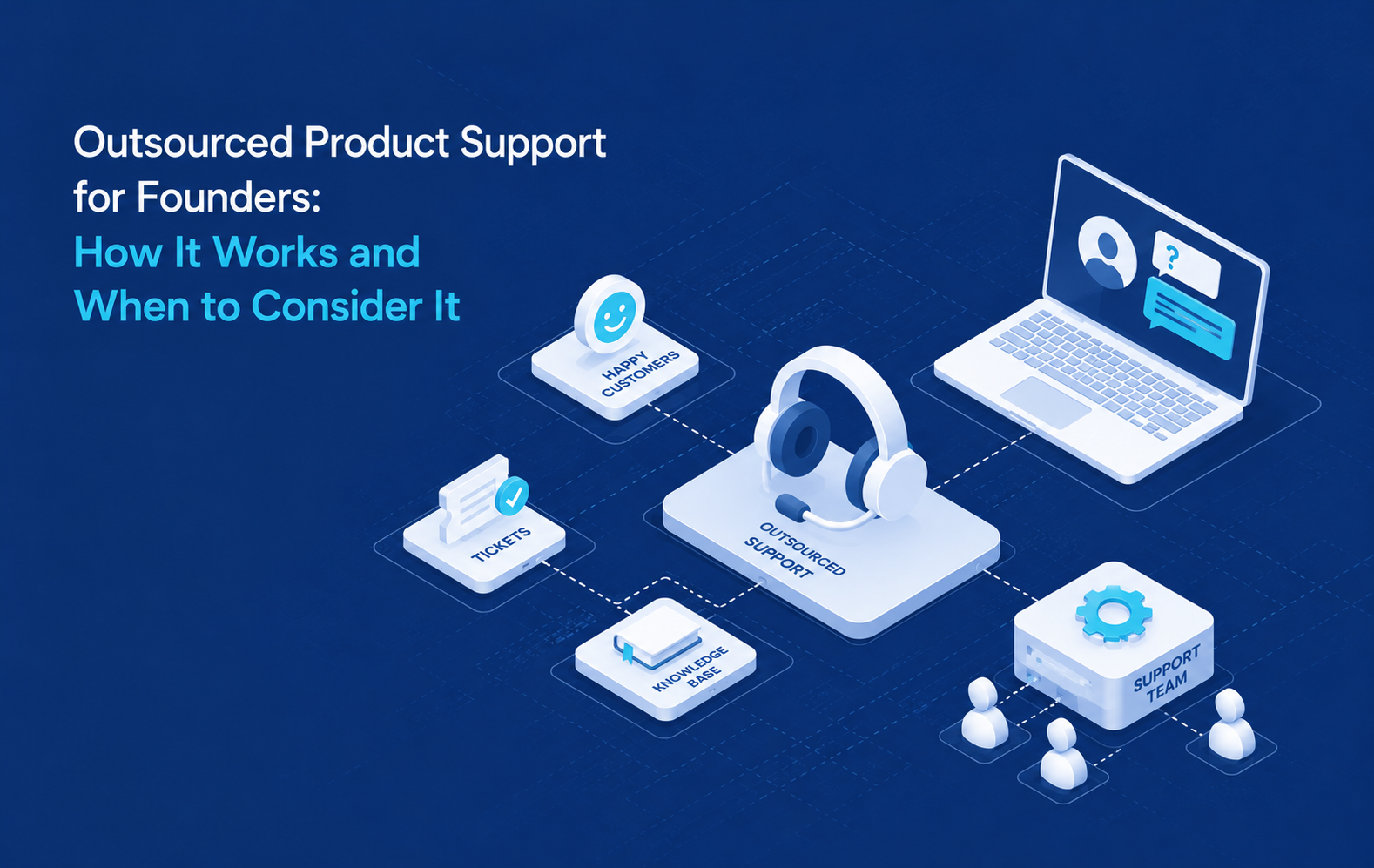
Outsourced product support for founders offers a practical solution. Instead of building an in-house support team immediately, founders can work with outsourced product support services that manage day-to-day customer support. In contrast, the internal team focuses on product development and business growth.
When Customer Support Starts Competing With Product Growth
During the early stages of a startup, founders often handle every support request themselves. This helps build strong customer relationships and provides direct feedback about the product.
However, as the customer base grows, support requests increase rapidly. Answering emails, resolving issues, and helping new users can take significant time away from product development, sales, and strategic planning. Slow response times can also reduce customer satisfaction and increase churn.
When support begins limiting product growth, outsourcing becomes a practical next step.
How Outsourced Product Support Fits Into a Growing Startup
An outsourced product support team works as an extension of your business. After learning about your product, customers, workflows, and communication style, the team manages routine support while keeping your internal team informed about important issues.
Support Area | Examples |
Customer Support | Email, live chat, FAQs |
User Onboarding | Account setup and product guidance |
Issue Reporting | Documenting and escalating bugs |
Knowledge Base | Updating help articles |
Customer Feedback | Sharing product insights with founders |
How the Outsourcing Process Works
Product Learning
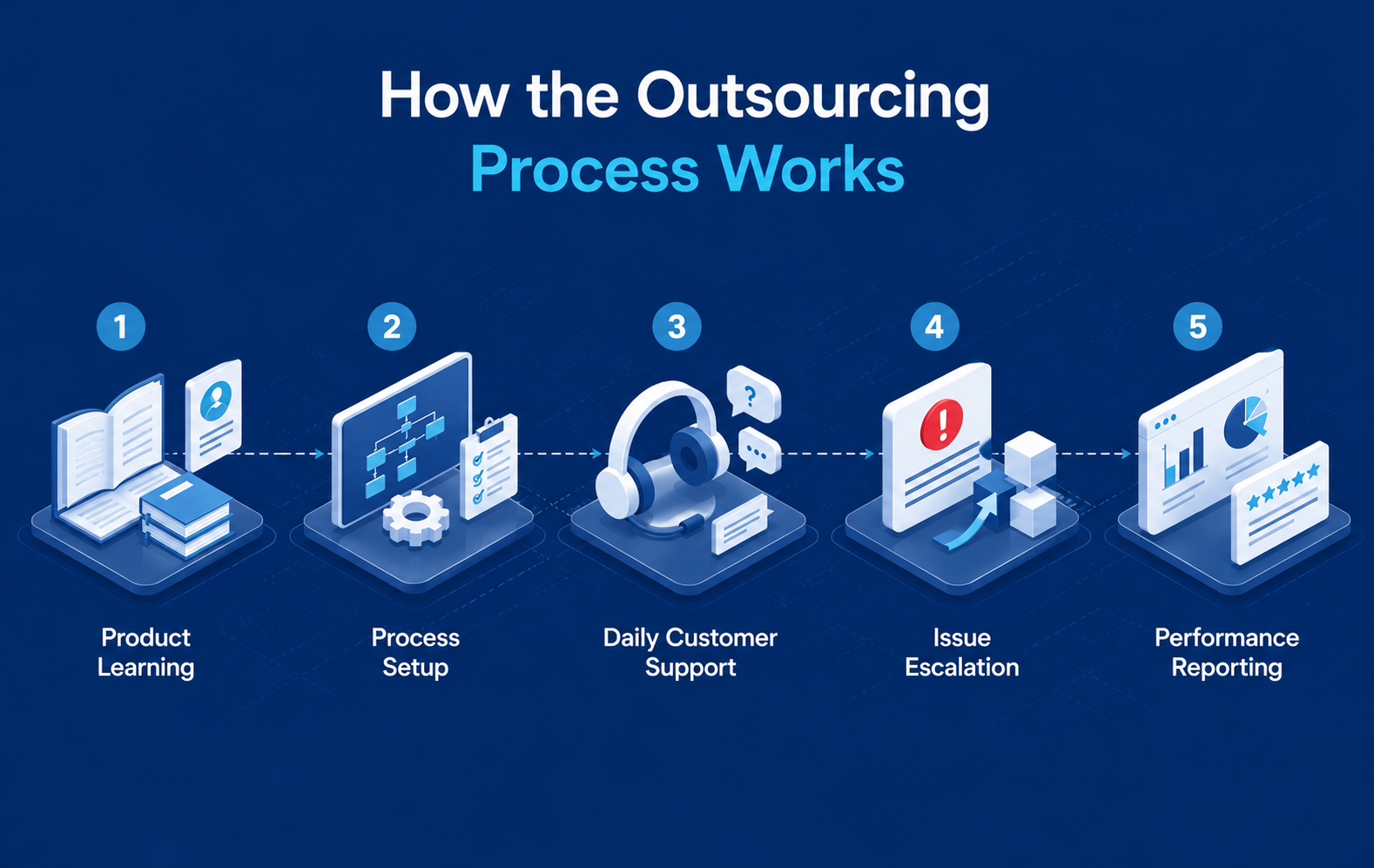
The outsourced support team begins by learning your product, target audience, customer journey, and brand voice. They review your documentation, FAQs, support history, and common customer issues to provide accurate and consistent assistance.
This training helps the team understand how your product works, what customers typically need, and when a request should be escalated to your internal team.
Process Setup
Before handling customer requests, clear support processes are established. This includes creating workflows, setting response time expectations, defining escalation paths, preparing response templates, and configuring support tools such as email, chat, or ticketing systems.
Having well-defined processes ensures customers receive consistent support while your internal team stays informed about important issues.
Daily Customer Support
Once onboarding is complete, the outsourced team manages day-to-day customer interactions across your chosen support channels. They answer product questions, assist with account setup, troubleshoot common issues, and guide users through product features.
By handling routine support requests efficiently, the team helps reduce response times and allows founders and developers to focus on product improvements.
Issue Escalation
Not every support request can be resolved by the outsourced team. Technical bugs, feature requests, security concerns, or complex product issues are documented thoroughly and escalated to your engineering or product team.
This structured escalation process ensures critical issues reach the right people quickly while customers continue receiving timely updates throughout the resolution process.
Performance Reporting
A good outsourced support partner provides regular performance reports that measure the quality of customer service. These reports typically include response times, ticket volume, resolution rates, customer satisfaction, recurring issues, and common feature requests.
Reviewing these insights helps founders identify product improvements, optimize support processes, and make informed decisions that enhance the overall customer experience.
Signs It's Time to Outsource Product Support
You should consider outsourced product support if:
You spend several hours each day answering customer questions.
If customer support takes up a large part of your day, it leaves less time for product development and business growth. Outsourcing helps you stay focused while maintaining reliable customer support.
Customer response times are becoming slower.
Slow responses can frustrate customers and affect their overall experience. An outsourced team helps improve response times and keeps support consistent.
Product launches create large support backlogs.
New releases often lead to a sudden increase in support requests. Outsourcing provides extra capacity to handle higher ticket volumes without delays.
Hiring a full in-house support team isn't practical yet.
Building an internal support team requires significant time and investment. Outsourcing provides access to experienced support professionals at a more flexible cost.
Customer satisfaction scores are declining.
Declining satisfaction often indicates that customers are not receiving timely or effective support. Outsourcing can improve service quality and customer experience.
Your product team is frequently interrupted by support requests.
Frequent support requests can reduce your team's productivity and slow product improvements. Outsourcing routine support allows your team to focus on building and innovation.
Benefits of Outsourced Product Support for Founders
More Time for Product Development
Founders can focus on building new features, fixing product issues, and growing the business instead of managing daily support.
Better Customer Experience
Customers receive faster responses and more consistent support across all communication channels.
Flexible Scaling
Support capacity can increase as your startup grows without the delays of recruiting and training new employees.
Lower Operating Costs
Outsourcing removes many hiring, training, and management expenses associated with building an internal support department.
What Should Stay In-House?
While outsourced teams handle customer support effectively, certain responsibilities should remain with your internal team, including:
Product strategy
Feature planning
Pricing decisions
Business leadership
Engineering decisions
Company vision
Outsourcing works best when it supports your business rather than replacing strategic decision-making.
Internal Support vs Outsourced Product Support
Factor | Internal Team | Outsourced Team |
Hiring Time | Longer | Faster |
Cost | Higher | More predictable |
Scalability | Limited | Flexible |
Management | Fully internal | Shared responsibility |
How to Choose the Right Outsourced Product Support Partner
Selecting the right outsourcing partner is important because they will represent your business when interacting with customers. A reliable provider should deliver consistent support, protect customer data, and adapt as your business grows.
Experience Supporting Software Products
Choose a partner with experience supporting software or SaaS products. They should understand customer journeys, technical terminology, and common product-related issues.
Strong Communication Practices
Look for a team that communicates clearly with both your customers and your internal staff. Regular updates and prompt responses help ensure a smooth support experience.
Transparent Performance Reporting
A good support partner should provide regular reports on response times, ticket resolution, customer satisfaction, and recurring issues. These insights help you measure performance and improve your support strategy.
Secure Data Handling
Your support team may access customer information, so strong security practices are essential. Ensure the provider follows data protection standards and has clear policies for handling sensitive information.
Flexible Scaling Options
As your customer base grows, your support needs will change. Choose a partner that can quickly increase or decrease support capacity without disrupting service quality.
Proven Client References
Review case studies, testimonials, or client references before making a decision. Positive feedback from other businesses demonstrates the provider's reliability and ability to deliver quality support.
Clear expectations and well-defined processes help build a successful long-term partnership.
Key Metrics to Measure Success
Track these performance indicators after outsourcing product support:
First Response Time
Measures how quickly your support team replies after a customer submits a question or support request. Faster response times improve customer satisfaction and build trust.
Average Resolution Time
Tracks the average time it takes to completely resolve a customer issue. Shorter resolution times indicate a more efficient support process.
Customer Satisfaction (CSAT)
Measures customer satisfaction with the support they receive, typically via post-support surveys. High CSAT scores show that customers are having positive support experiences.
Support Ticket Volume
Shows the total number of customer support requests received over a specific period. Monitoring ticket volume helps you plan staffing needs and identify periods of increased demand.
Repeat Support Requests
Measures how often customers contact support again for the same issue. A lower repeat rate suggests that issues are being resolved correctly the first time.
Customer Retention Rate
Tracks how many customers continue using your product over time. Strong support often contributes to higher retention by improving the overall customer experience.
Monitoring these metrics helps measure support quality and identify opportunities for improvement.
FAQs
1. Is outsourced product support suitable for startups?
Yes. It helps startups deliver reliable customer support without investing in a large internal support team.
2. Can outsourced teams answer technical product questions?
Yes. With proper product training and clear escalation processes, outsourced teams can handle many technical inquiries.
3. Will customers know support is outsourced?
Usually not. Most outsourced teams work as an extension of your brand and follow your communication style.
4. When should founders outsource product support?
Founders should consider outsourcing when customer support starts reducing the time available for product development, sales, or business growth.
Conclusion
Outsourced product support for founders helps startups deliver reliable customer service while freeing founders to focus on building and improving their products. As customer demand grows, outsourcing provides a scalable and cost-effective way to maintain support quality without expanding an in-house team too early.
If customer support is slowing your product development or affecting customer satisfaction, outsourced product support can help your startup grow with greater efficiency and confidence.
Your Product Could Be the
Next Case Study
Explore what we’ve built — and let’s collaborate to create something impactful for your business.
We reply within 24 business hours.