Managed IT Services: Complete Guide to Business & Tech Solutions

TL;DR / Summary
Managing modern IT infrastructure, digital transformation, and security threats can strain internal teams. This guide explores how Managed IT Services and IT consulting solve operational bottlenecks, cut costs, and empower growing businesses and legal practices.
Table of Contents
- What Are Managed IT Services?
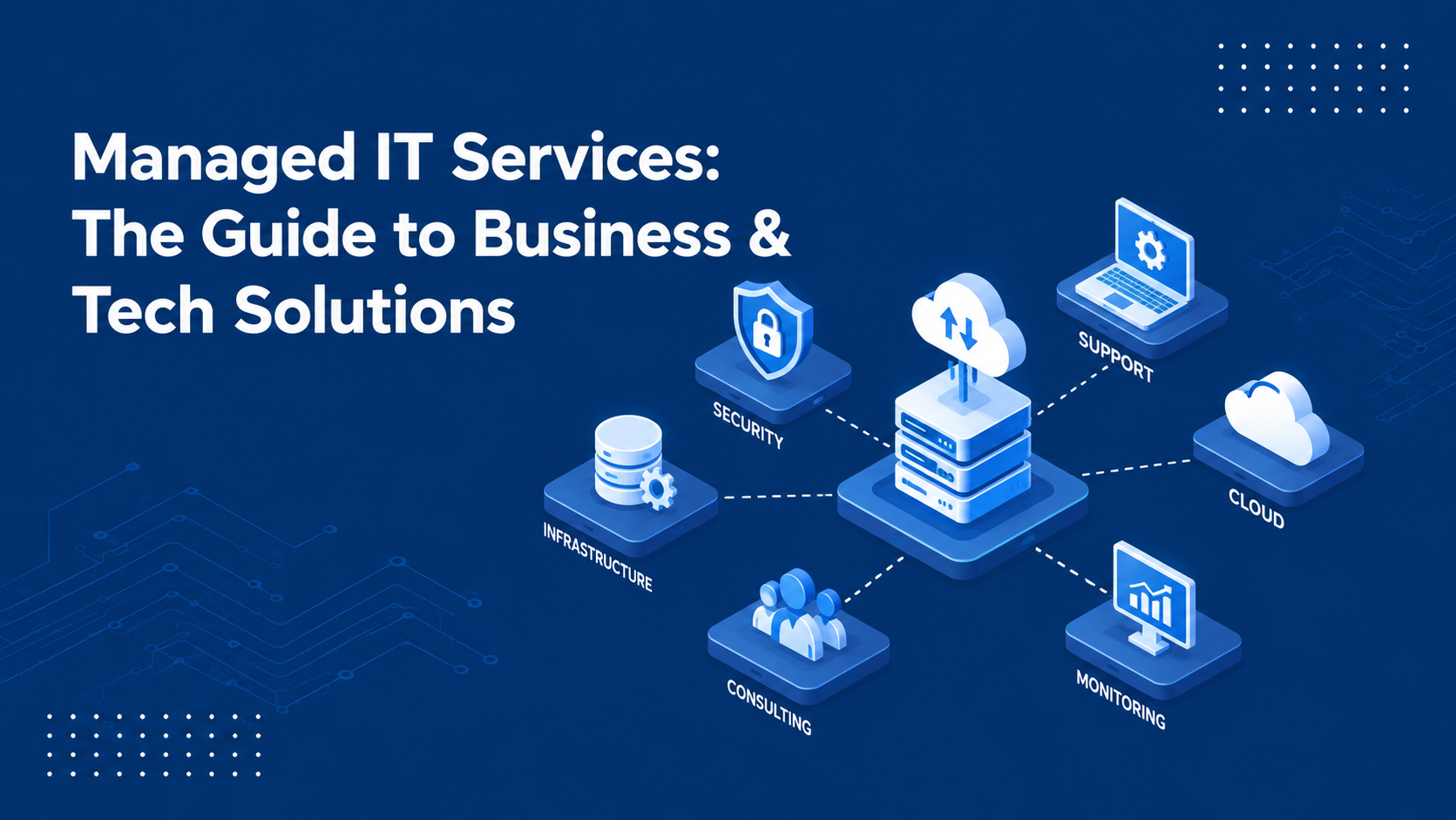
- What Does Managed IT Services Include?
- Core Business Challenges Facing Companies Today
- How Technology & MSPs Solve These Challenges
- Managed IT Services vs. Traditional IT Support vs. IT Consulting
- The Role of IT Consulting for SME Growth
- Primary Benefits of Managed IT Services
- 1. Superior Cost Efficiency
- 2. Access to Latest Technologies & Elite Expertise
- 3. Maximum Scalability
- 4. Robust Security & Proactive Maintenance
- Industry Spotlight: Real-World Applications
- Spotlight: Modern Technology for Law Firms
- How to Choose the Right IT Partner
- Frequently Asked Questions (FAQs)
- 1. What are the key benefits of managed IT services?
- 2. What are the risks of using an MSP, and how can they be mitigated?
- 3. What is the scope of IT managed services?
- 4. How does IT consulting differ from Managed IT services?
- 5. How do small businesses benefit from today's managed technology?
- Conclusion
In today’s fast-evolving digital market, businesses succeeding at scale understand a fundamental truth: technology is the backbone of operational success. However, managing modern IT infrastructure, navigating rapid digital transformation, and defending against cybersecurity threats can quickly overwhelm internal teams.
To bridge this gap, growing startups, small-and-medium enterprises (SMEs), and specialized professional firms are partnering with Managed Service Providers (MSPs) and IT consultants. By outsourcing technology responsibilities, companies unlock enterprise-grade infrastructure, lower costs, and eliminate downtime - allowing leadership to focus on core growth.
What Are Managed IT Services?
Managed IT Services involve partnering with an external partner to outsource the responsibility of managing, maintaining, and supporting your IT ecosystem. The specialized third-party company providing these services is called a Managed Services Provider (MSP).
Instead of hiring expensive in-house teams or relying on reactive fix-it services when things break, an MSP assumes proactive, ongoing ownership of your technical infrastructure.
What Does Managed IT Services Include?
A full-suite Managed IT solution covers all critical areas of modern enterprise operations:
Security Management: Implementing AI/ML threat detection, setting up firewalls, enforcing multi-factor authentication (MFA), and conducting continuous vulnerability audits to prevent data leaks.
Network Topology & Infrastructure Management: Designing, connecting, and securing network topologies (e.g., star, mesh, hybrid) to ensure uninterrupted connectivity and cross-department collaboration.
Software Management & Support: Designing, building, updating, and maintaining custom enterprise software, mobile applications, and web tools to preserve long-term functionality.
Cloud Solutions & Migration: Transitioning legacy architectures to scalable cloud environments (AWS, Azure, Google Cloud) using SaaS, PaaS, and IaaS frameworks for secure remote access.
Data Backup & Disaster Recovery: Setting up automated backup protocols and fail-safe recovery environments to guarantee zero data loss in the event of hardware failures or breaches.
Communication & Collaboration Systems: Securing electronic communication channels, unified communication tools, and client-facing messaging portals.
Core Business Challenges Facing Companies Today
Modern organizations face more operational friction than ever. According to industry surveys, over 35% of business leaders turn to digital transformation to replace legacy systems and improve customer service. Without proactive tech management, businesses run into ten critical roadblocks:
Data Privacy and Security Risks: Rapid digitization exposes sensitive records to hacking, phishing, and ransomware threats, endangering brand reputation and compliance.
Inability to Leverage Data for Insights: Raw data piles up across systems without being transformed into actionable, strategic insights.
Poor Customer Relationships: Unorganized customer interaction channels lead to missed orders, slow support, and fragmented user experiences.
Lack of 24/7 Customer Support: Over-reliance on human-only support creates ticket backlogs, slow response times, and customer dissatisfaction.
Time Wastage via Manual Processing: Staff spend endless hours on manual data entry, lowering team productivity and introducing costly human errors.
Low Sales Conversions: Unorganized funnel data leads to weak lead tracking and wasted marketing opportunities.
Talent Shortages & Skill Gaps: Hiring specialized tech talent in-house (such as cloud architects or DevOps engineers) is prohibitively expensive for growing firms.
Data Silos & Weak Collaboration: Disconnected software tools across sales, finance, and operations impair cross-departmental collaboration.
Stifled Innovation: Teams bogged down by legacy systems lack the bandwidth to adopt cutting-edge tools or innovate.
Uncontrolled & Unmapped Expenses: Unmonitored legacy software and emergency IT fixes quietly bleed company profits.
How Technology & MSPs Solve These Challenges
Partnering with an MSP gives organizations immediate access to modern tools that solve these daily and long-term operational challenges:
AI & Machine Learning Threat Detection: AI algorithms monitor network traffic and user behavior logs in real time, detecting anomalies long before a human analyst could spot them.
Bulk Data Processing & Predictive Analytics: AI-backed analytics engines collect data from multiple touchpoints, providing real-time dashboards and predictive user-behavior models to increase sales conversions.
CRMs & AI Chatbots: Integrated CRM systems record every client interaction, while ChatGPT API and AI chatbot integrations resolve 24/7 client inquiries instantly, reducing support costs.
Workflow Automation: Automating repetitive, rule-based processes frees up 40%+ of employee time, letting teams focus on high-value business development.
Unified ERP Dashboards: Enterprise Resource Planning (ERP) platforms integrate financial, operational, and sales data into a single, unified interface to eliminate silos and control expenses.
Emerging Tech Adoption (IoT & Cloud): Integrating Internet of Things (IoT) sensors in physical setups (e.g., factories, medical centers) provides real-time monitoring and predictive maintenance to eliminate equipment downtime.
Managed IT Services vs. Traditional IT Support vs. IT Consulting
To make the right technical investments, it is vital to understand the difference between these three tech management approaches:
Feature / Aspect | Traditional Break/Fix IT Support | IT Consulting Services | Managed IT Services (MSP) |
Operating Approach | Reactive: Fixes issues only after a break or failure occurs. | Strategic: Evaluates tech, creates roadmaps, and plans architecture. | Proactive: Continuously monitors systems 24/7 to prevent issues. |
Billing Model | Unpredictable, hourly fee per emergency incident. | Project-based fee or hourly advisory rate. | Predictable, fixed monthly subscription or retainer. |
Scope of Work | Short-term hardware/software troubleshooting. | High-level planning, vendor selection, & system design. | Full operational oversight, QA, maintenance, & day-to-day management. |
Business Impact | High risk of costly downtime. | Defines future vision and technical strategy. | Guarantees business continuity, security, and scalability. |
The Role of IT Consulting for SME Growth
While MSPs take over daily operational management, IT Consulting provides small-to-medium enterprises (SMEs) with high-level strategic direction. Small businesses often struggle with budget limitations, a scarcity of skilled talent, and blind decision-making. IT consultants help SMEs by:
Designing cost-effective, custom software roadmaps that align with long-term goals.
Providing flexible pricing models (hourly rates, fixed project costs, or retainers).
Eliminating technical debt and preventing companies from purchasing the wrong technology.
Primary Benefits of Managed IT Services
Investing in an MSP partner delivers tangible strategic and financial benefits:
1. Superior Cost Efficiency
Outsourcing eliminates the high overhead of full-time IT salaries, benefits, onboarding, and ongoing technical training. Instead, companies gain a full team of specialists for a fraction of the cost.
2. Access to Latest Technologies & Elite Expertise
MSPs bring a deep bench of experienced software engineers, cloud architects, and QA specialists who live and breathe modern technology trends, ensuring your business never falls behind competitors.
3. Maximum Scalability
As your business expands into new markets or experiences seasonal demand spikes, an MSP instantly scales your server capacity, user seats, and software capabilities without infrastructure delays.
4. Robust Security & Proactive Maintenance
Software support and quality assurance (QA) are continuous processes. An MSP keeps all systems updated, patched, and monitored around the clock, stopping potential cyber threats and bugs before they impact operations.
Industry Spotlight: Real-World Applications
Technology solutions adapt to the unique regulatory, operational, and technical demands of different sectors:
Spotlight: Modern Technology for Law Firms
The legal industry provides a clear blueprint for how domain-specific IT management transforms daily operations:
Streamlined Case Management: Centralized cloud hubs organize case files, track court dates, and trigger automated reminders, letting attorneys manage larger caseloads easily.
AI-Powered Legal Research: Natural language processing engines analyze decades of legal precedents, statutes, and case histories in seconds, saving hundreds of billable research hours.
Automated Document Drafting: Pre-defined smart templates generate error-free contracts, pleadings, and legal agreements within minutes.
Encrypted Communication & Client Portals: Secure portals allow encrypted document sharing, automated scheduling, and real-time case status updates, dramatically improving client trust and transparency.
How to Choose the Right IT Partner
Selecting the right MSP or IT consulting firm requires a structured selection process:
Document Your Precise Business Requirements: Clearly list your technical bottlenecks - whether you need full network oversight, custom software development, cloud migration, or round-the-clock cybersecurity.
Evaluate Case Studies & Relevant Work: Review the vendor's past projects and industry experience to verify they have successfully solved similar technical challenges.
Assess Their Service Level Agreements (SLAs): Ensure the provider offers explicit response-time guarantees, dedicated resource allocations, and robust escalation protocols.
Conduct Direct Consultations: Schedule discovery calls to assess their communication clarity, company culture alignment, and problem-solving framework before signing long-term agreements.
Frequently Asked Questions (FAQs)
1. What are the key benefits of managed IT services?
The main benefits include lower operational costs, 24/7 proactive monitoring, enterprise-grade cybersecurity, instant access to specialized tech talent, predictable monthly budgeting, and seamless technical scalability.
2. What are the risks of using an MSP, and how can they be mitigated?
Potential risks include losing direct oversight and the risk of unauthorized data access. These are mitigated by partnering with an established MSP that uses strict Service Level Agreements (SLAs), encrypted cloud environments, multi-factor authentication, and transparent reporting dashboards.
3. What is the scope of IT managed services?
The scope covers the complete technical lifecycle - from initial infrastructure assessment and network topology design to cloud migration, cybersecurity enforcement, custom software development, and ongoing system maintenance.
4. How does IT consulting differ from Managed IT services?
IT consulting provides high-level strategic guidance, technology evaluation, and digital roadmap planning. Managed IT services handle the day-to-day operational execution, technical maintenance, monitoring, and support of those systems.
5. How do small businesses benefit from today's managed technology?
SMEs gain access to advanced tech stacks, AI automation tools, and elite technical talent without having to fund, recruit, and maintain expensive full-time in-house IT departments.
Conclusion
Managed IT services are no longer a luxury reserved for large enterprises - they are an operational necessity for any business aiming to scale securely and cost-effectively. By combining proactive network management, cloud infrastructure, AI automation, and strategic IT consulting, partnering with an MSP transforms technology from a daily stressor into a high-powered growth driver.
Whether you are a startup building an MVP, an SME looking to control overhead, or a specialized law firm seeking to streamline operations, Netizens Technologies provides engineering-led custom software development, IT consulting, and managed services tailored to your exact business goals.
Your Product Could Be the
Next Case Study
Explore what we’ve built — and let’s collaborate to create something impactful for your business.
We reply within 24 business hours.