The Hidden Cost of a Slow Engineering Hire, And What to Do Instead

TL;DR / Summary
Slow engineering hires burn runway and stall roadmaps. Learn the true cost of open roles and how staff augmentation solves hiring delays.
Table of Contents
- What is the Real Cost of a Vacant Engineering Role?
- Why Does Full-Time Developer Recruiting Take So Long Today?
- The Full-Time Hiring vs. Staff Augmentation Breakdown
- How Staff Augmentation Eliminates the Hiring Drag
- A Practical Framework: When to Hire vs. When to Augment
- 5 Steps to Successfully Integrate Augmented Developers
- Frequently Asked Questions
- 1. How quickly can an augmented engineer start working on our codebase?
- 2. Will the augmented developers work in our time zone?
- 3. How do we protect our intellectual property when using staff augmentation?
- 4. Does staff augmentation cost more than hiring a full-time developer?
- 5. Who manages the daily tasks of the augmented developers?
- Scale Your Engineering Team Without the Hiring Drag
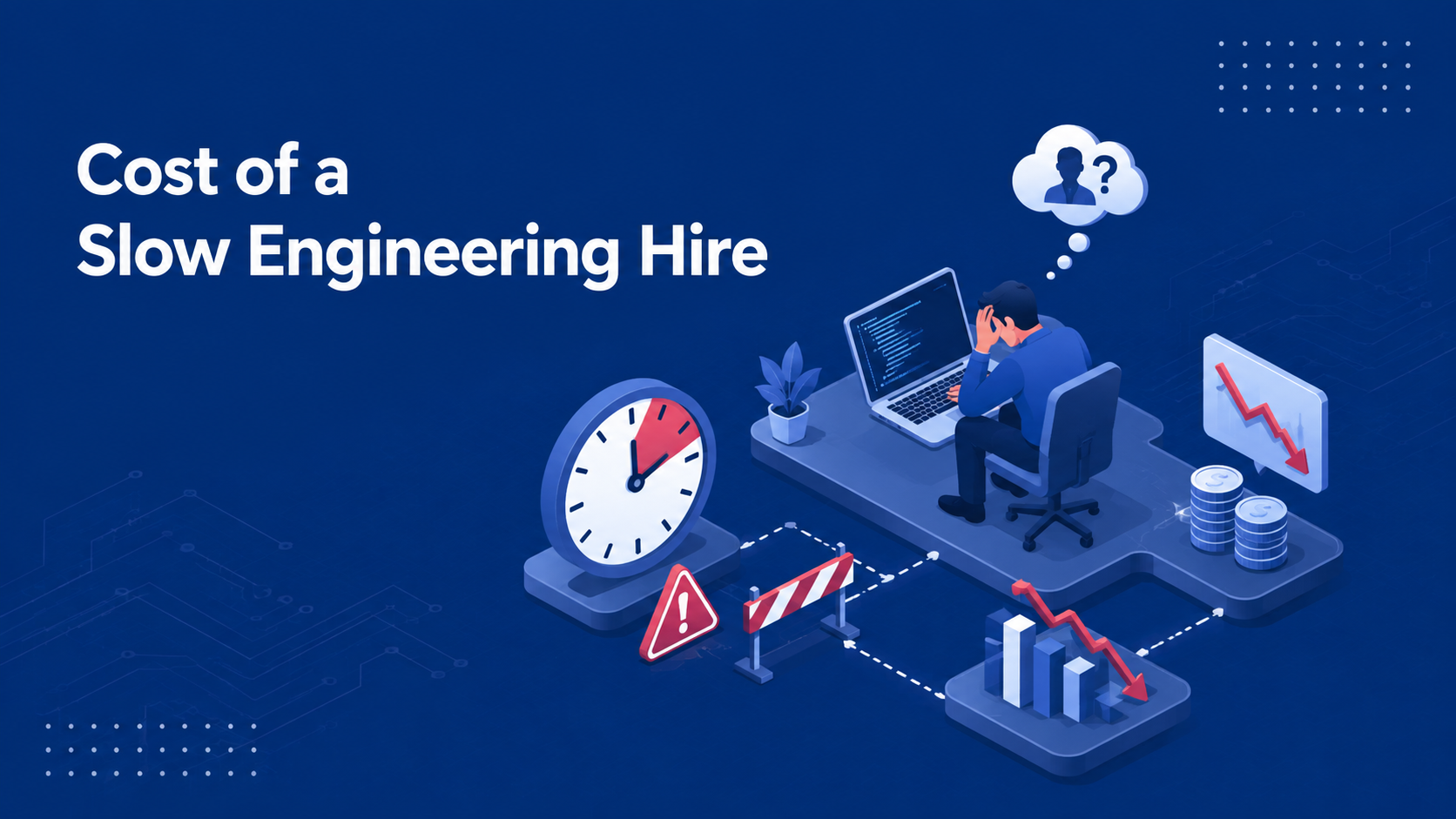
A slow engineering hire costs far more than recruiter fees and recruiter software subscriptions. When a critical developer seat stays empty for three to six months, the true expense shows up in delayed product launches, burned-out senior engineers, lost market share, and wasted runway. While traditional recruitment drags on, product roadmaps stall and existing engineering teams suffer under heavy workloads.
Instead of waiting months to source, interview, and onboard full-time software engineers, growing companies are turning to flexible delivery models. Staff augmentation, a hiring strategy where specialized external developers integrate directly into your internal team, allows engineering leaders to add experienced technical talent within days rather than months.
What is the Real Cost of a Vacant Engineering Role?
The real cost of an unfilled software engineering role is the combined loss of revenue, recruiter overhead, team burnout, and missed market opportunities. Most business leaders calculate hiring expenses by adding up job board fees, recruiter commissions, and sign-on bonuses. However, the largest financial damage happens quietly while the position remains open.
When an engineering seat sits vacant for 60 to 90 days, your business absorbs four distinct financial hits:
Direct Recruiting Costs: Sourcing fees, agency retainers, coding test subscriptions, and internal HR time spent reviewing hundreds of unqualified resumes.
Opportunity Cost of Delayed Features: Key product updates, security fixes, and enterprise features get pushed back. Every month a feature sits in the backlog is a month your competitors win market share.
Existing Team Fatigue: Senior engineers spend up to 15 hours per week reviewing code samples and conducting technical interviews instead of shipping software. The remaining developers must take on extra tasks, which leads to employee turnover.
Onboarding Lag: Once a developer accepts an offer, they often give two to four weeks' notice at their current job. After joining, it typically takes another month to get their development environment configured and learn your codebase.
Why Does Full-Time Developer Recruiting Take So Long Today?
Full-time developer hiring takes months because traditional recruitment processes rely on lengthy multi-stage interviews, skill mismatches, and heavy competition for senior talent. Engineering managers must sort through hundreds of automated applicant resumes while trying to verify practical coding skills.
The hiring funnel for a full-time software engineer often stretches across six distinct stages:
Sourcing and Resume Screening (2 to 3 weeks): HR screens hundreds of applicants, but very few match the required technical stack or domain experience.
Initial Recruiter Calls (1 week): HR conducts screening calls to check salary expectations and culture fit.
Technical Assessments and Take-Home Projects (1 to 2 weeks): Candidates take days to complete coding challenges, slowing response times.
System Design and Team Panel Interviews (1 to 2 weeks): Engineering leaders spend valuable development hours interviewing candidates.
Offer Negotiation and Resignation Notice (2 to 4 weeks): Top candidates often balance multiple offers, leading to extended salary negotiations or outright rejections.
Initial Onboarding (2 to 4 weeks): The candidate joins, but requires weeks of setup, access requests, and training before making meaningful code commits.
By the time a traditional hire makes their first production code release, your product team has lost an entire quarter of development progress.

The Full-Time Hiring vs. Staff Augmentation Breakdown
To choose the right model for your engineering team, compare the timeline, flexibility, and financial risk of full-time recruiting against specialized developer augmentation.
Evaluation Factor | Traditional Full-Time Hiring | Staff Augmentation |
Time to Onboard | 60 to 120 days | 3 to 7 days |
Upfront Hiring Expense | High (recruiter fees, background checks, HR time) | Low (no placement fees or recruiting costs) |
Commitment Level | Long-term salary, benefits, and equity | Flexible (sprint-based, monthly, or project-based) |
Technical Screening | Managed entirely by your internal team | Pre-screened by an experienced engineering partner |
Scalability | Slow to add; difficult and costly to reduce | Quick to scale up or down based on roadmap demands |
Team Management | Internal engineering leadership | Internal engineering leadership |
While traditional hiring builds permanent institutional knowledge for core product lines, staff augmentation provides the speed and flexibility needed to clear backlog pressure and hit critical release dates without long-term overhead.
How Staff Augmentation Eliminates the Hiring Drag
Staff augmentation eliminates recruitment delays by providing pre-vetted senior software engineers who join your current team and follow your existing development processes. Instead of building a hiring pipeline from scratch, you gain immediate access to developers who are already proficient in your technology stack.
Here is how modern staff augmentation speeds up product development:
Immediate Access to Senior Technical Talent: Technology partners maintain active pools of vetted frontend, backend, mobile, DevOps, and AI engineers. You skip the initial sourcing stage entirely and interview candidates who possess exact skill matches for your stack, whether you use React, Node.js, Python, or AWS infrastructure.
Minimal Administrative Burden: Your company avoids long-term agency placement commitments, health insurance administration, payroll taxes, and hardware procurement delays. The staffing partner handles compliance and employment administration.
Full Control Over Workflows and Deliverables: Unlike traditional software outsourcing where an external team manages project outcomes independently, augmented developers work directly under your engineering leadership. They attend your daily standups, use your Jira or GitHub boards, follow your coding standards, and communicate in your Slack channels.
Low-Risk Trial Periods: Reputable technology partners offer trial periods (such as a 2-week paid trial) so you can evaluate a developer's real-world code quality, communication skills, and velocity before making a long-term commitment.
A Practical Framework: When to Hire vs. When to Augment
Deciding whether to open a traditional job requisition or partner with a staff augmentation provider depends on your timeline, project scope, and core business focus. Use this decision framework to determine the best approach for your current engineering needs.
Choose Traditional Hiring When:
Core Product Ownership: You are building the central intellectual property of your company and need long-term foundational leadership (such as a Chief Technology Officer or Principal Architect).
Flexible Development Timeline: You have at least four to six months of runway before the open position impacts your product release schedule.
Permanent Workload: The team capacity requirement will remain constant for the next two to three years without fluctuation.
Choose Staff Augmentation When:
Tight Release Deadlines: You have a hard product launch date, customer commitment, or trade show target that cannot move.
Burnt-Out Engineering Team: Senior developers are working extra hours to maintain velocity while handling open position interviews.
Short-Term Specialized Skills: You require specific expertise, such as migrating infrastructure to Kubernetes, building custom AI automation pipelines, or integrating complex ERP systems, without needing that skill set permanently.
Headcount Budget Restrictions: You have capital allocated for development work but face corporate hiring freezes on permanent full-time headcount.
5 Steps to Successfully Integrate Augmented Developers
Define Clear Technical Requirements: Outline the precise tech stack, framework versions, and project tasks the developer will handle.
Prepare Access and Environments: Set up repository access, staging server permissions, communication tools, and issue tracking accounts before their first day.
Assign a Dedicated Technical Mentor: Pair the augmented developer with an internal senior engineer for their first week to answer architecture questions and review initial pull requests.
Include Them in Team Ceremonies: Invite external developers to sprint planning, daily standups, and retrospective meetings, so they stay aligned with project goals.
Measure Code Output Early: Track pull request frequency, code review feedback, and feature completion rates during the initial two-week period to ensure high quality standards.
Frequently Asked Questions
1. How quickly can an augmented engineer start working on our codebase?
Most augmented developers can integrate into your development environment and start reviewing code within three to seven business days, compared to the two to four months required for traditional hires.
2. Will the augmented developers work in our time zone?
3. How do we protect our intellectual property when using staff augmentation?
All intellectual property, code repositories, and work products created by augmented developers belong entirely to your company. Master service agreements and non-disclosure contracts protect your legal ownership from day one.
4. Does staff augmentation cost more than hiring a full-time developer?
While hourly rates for augmented staff may appear higher on paper, overall expenses are often lower. You eliminate recruiter fees, health benefits, payroll taxes, equipment overhead, and long-term severance liabilities.
5. Who manages the daily tasks of the augmented developers?
Your internal engineering leadership manages daily tasks, sprint allocations, and code reviews, ensuring the developers follow your existing software delivery process.
Scale Your Engineering Team Without the Hiring Drag
A slow recruitment pipeline should not be the bottleneck that stalls your product roadmap. Whether you need to clear a stubborn backlog, build new custom features, or accelerate your release timeline, staff augmentation provides the experienced technical capacity your team needs right now.
Netizens Technologies helps startups, SaaS businesses, and enterprise engineering teams scale development quickly. With experienced developers, flexible engagement structures, and a 2-week paid trial option, you can expand your engineering capacity without hiring delays or long-term overhead.

Your Product Could Be the
Next Case Study
Explore what we’ve built — and let’s collaborate to create something impactful for your business.
We reply within 24 business hours.